In Oak Park's Historic Districts, It's the Garage That Holds Up a Sale
August 13, 2026
August 13, 2026
Dr. Lillian Magana's family has owned the house at 501 Linden Avenue since 1972. Last fall, she asked the Oak Park Historic Preservation Commission for permission to replace her home's original windows with something brighter: clear glass, no muntins, in a home that sits inside the Frank Lloyd Wright-Prairie School of Architecture Historic District. The existing windows were a 9-over-1 pattern. Her plan called for 9-over-9. The Commission's chair pushed back on the spot, asking why she wouldn't simply replace the windows to match what was already there, and pointed her toward a manufacturer that could apply muntins to both sides of the glass without sacrificing the extra light she wanted.
That exchange, captured in the Commission's October 2025 minutes, is a small moment. But it points to something bigger about what actually slows down a sale or a renovation in Oak Park's historic districts. It isn't the dramatic stuff, the additions and the rear extensions that homeowners expect will draw scrutiny. It's the routine maintenance projects that owners assume are exempt: new windows, new siding, and above all, new garages.
If your address sits inside one of Oak Park's three locally designated historic districts, or carries individual landmark status, exterior work is subject to review before you can pull a permit. The three districts have different histories but the same practical effect on a listing timeline. The Frank Lloyd Wright-Prairie School of Architecture Historic District traces back to a 1972 local designation, was added to the National Register of Historic Places in 1973, and had its boundaries expanded on the National Register in 2009 and again at the local level in 2012. The Ridgeland/Oak Park Historic District was listed on the National Register in 1983 and locally designated a decade later, in 1993. The Gunderson Historic District followed in 2002 and was expanded again in 2003.
None of that history changes what happens when you want to sell. What changes is the paperwork.
Oak Park's process runs on two tiers. A Certificate of Appropriateness is the formal track, required for construction, alteration, relocation, or demolition affecting a landmark or a building inside a historic district. An Advisory Review is the lighter version, used for smaller-scope work. The distinction sounds clean until you watch it applied.
| Advisory Review | Certificate of Appropriateness | |
|---|---|---|
| Typical trigger | Smaller-scope exterior changes, often precedent-based | Additions, demolitions, new construction, larger material changes |
| Public hearing | Not usually required | Required, with mailed notice to owners within 250 feet |
| Validity | Tied to the scope approved | Valid for one year from issuance |
| Homeowner's leverage | Can request a staff pre-application review first | Same option available before formal filing |
The Commission's own March 2025 minutes show how much the track depends on precedent rather than a fixed rule. One owner had proposed a rear corner addition along with infill windows, repaired stained glass, and new dormer pilasters, and a commissioner asked staff directly why that scope of work was being handled as an Advisory Review instead of a full Certificate of Appropriateness. Staff pointed to an earlier, similar project at 816 N Oak Park Ave as the reason it had been assigned the lighter track. In other words, the review track for your project can hinge on what happened at a different address years earlier, something no homeowner would know to ask about unless they requested a preliminary review first.
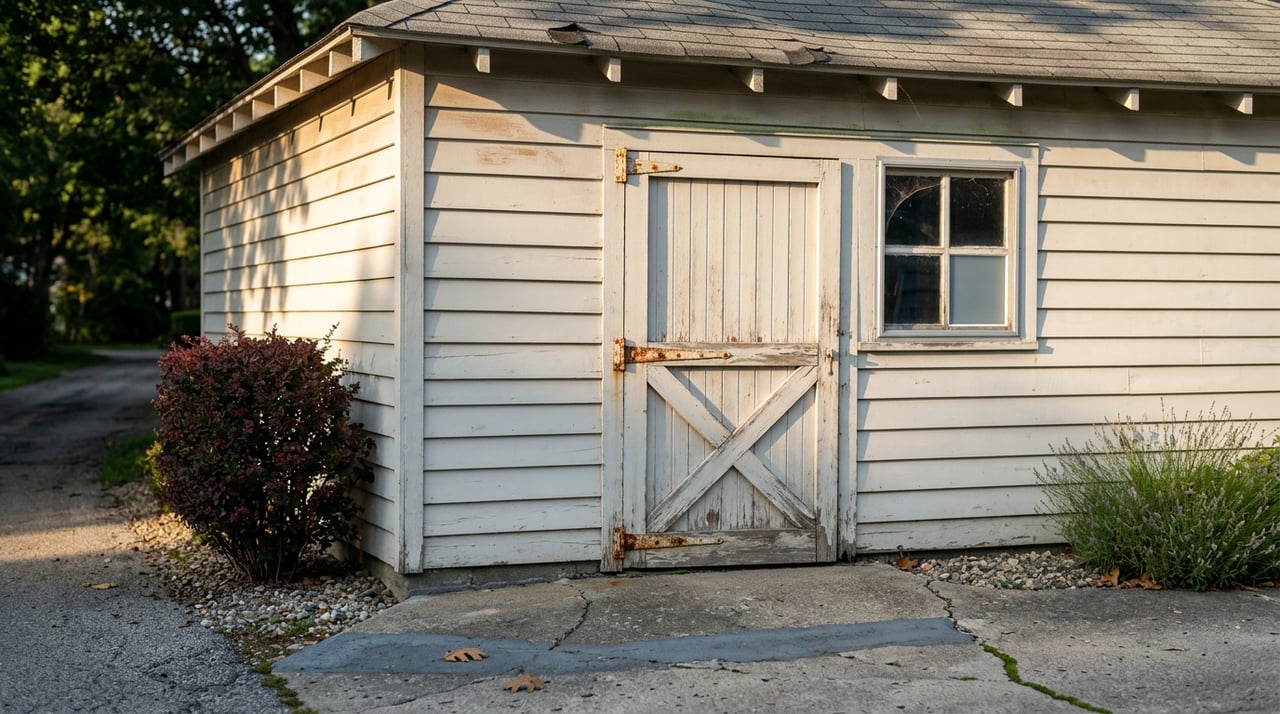
Here is the pattern that surprises most sellers. Look at the Commission's agenda for its January 22, 2026 meeting. Six items were up for review that night. Three of them were garages: a demolition of a 12x20 detached garage at 809 Linden Avenue with an advisory review for a new 22x24 structure, a demolition of an 18x20 garage at 226 N Taylor Avenue paired with review of a 22x22 replacement, and a demolition of an 18x18 garage at 316 N Scoville Avenue with a 24x22 rebuild under review. The same contractor, David Krecek, appeared on all three applications that night.
Half the Commission's docket that month was garages, not additions or major remodels. That's the opposite of what most sellers expect walking into a listing conversation. A homeowner planning to tear down a rotting garage before putting the house on the market often assumes it's routine, the kind of project a contractor handles without anyone from the village weighing in. In an Oak Park historic district, it's the same review queue as a rear addition, just processed on a faster track when the new structure matches the old one in scale and material.
The Commission's guiding instinct, stated plainly in its own preservation materials, is to retain original material first, repair it second, and replace it only when the first two aren't possible. That instinct shows up again and again in the case files, and it's usually cheaper material choices, not bigger design ambitions, that cause friction.
In June 2025, a homeowner in the Frank Lloyd Wright-Prairie School district won approval for a two-story rear addition, but only on the condition that the project use LP Smart siding, Boreal, or a wood product instead of Hardie board, a fiber-cement product the Commission felt read as too modern next to the home's original material. A separate application that same month, for a rear addition in the Gunderson district, drew a suggestion from a commissioner that the owner eventually replace the asbestos siding on the rest of the house to match new work being done to the back, once time and money allowed.
The pattern repeats with windows. In the Ridgeland/Oak Park district, a contractor proposing to replace fourteen original wood porch windows wanted to switch to a single-pane casement style because it was more cost effective than repair. The Commission asked for a simulated divided lite to preserve the look of the original grille pattern instead. In the Magana case, the sticking point wasn't whether new windows were allowed. It was whether the new ones would look like the old ones.
None of these owners were trying to violate a rule. They were trying to save money or gain light, two entirely reasonable goals for anyone preparing a home for sale. The Commission's incentive runs the other direction: preserve the visual continuity of the block, regardless of what's cheaper or brighter for the current owner. That mismatch, not any single ordinance, is what generates most of the back and forth on a given meeting night.
Oak Park's resale market has not been forgiving of delay. Over the three months ending in May 2026, homes in Oak Park sold in an average of 42 days and drew multiple offers, a pace that leaves little room for a listing to sit idle while a garage or window application works through review. A Certificate of Appropriateness, once issued, stays valid for one year, which sounds generous until you factor in that a public hearing requires notice mailed to every owner within 250 feet and published in a local newspaper before the Commission can vote. That process alone can add weeks a seller didn't plan for.
The Commission does offer a shortcut. Any owner can request a preapplication review, an informal conversation with staff or the Commission before filing anything formal, to find out whether a planned project is likely to clear as submitted. Owners who use it tend to walk into the public process with a plan the Commission has already signaled it will support. Owners who skip it are the ones showing up mid-meeting, defending muntins they didn't know were negotiable.
Does every home in Oak Park need historic review before it can be listed? No. Review applies to properties inside the three designated districts or carrying individual landmark status, and only for exterior work. A Certificate of Appropriateness is not itself a building permit and doesn't cover code compliance or zoning, so it typically runs alongside, not instead of, your standard permit process.
How long does an approved Certificate of Appropriateness last? One year from the date it's issued, so timing matters if your renovation and listing plans stretch across seasons.
Can I find out in advance whether my project will be approved? Yes. Any owner can request a preliminary staff or Commission review before filing a formal application, which is the fastest way to learn whether your material choice matches what's already been approved on similar homes.
Oak Park's historic housing stock is a real part of its appeal, and buyers actively seek out the leaded glass, the original millwork, the porch details that these districts exist to protect. Knowing how the approval process actually works, rather than how it's assumed to work, is the difference between a garage rebuild that clears in weeks and one that eats into your selling season. If you're weighing a pre-listing project on a home inside one of these districts, or just want a read on what your Oak Park home is worth before you start, the team at Gagliardo Group has spent three decades helping owners in this exact market sequence the work correctly the first time.