Everyday Life In Riverside’s Historic Village
June 25, 2026
June 25, 2026
If you are wondering what day-to-day life really feels like in Riverside’s Historic Village, the short answer is this: it feels connected, green, and surprisingly convenient. You are not just choosing a home here. You are stepping into a village where parks, local businesses, rail access, and historic design all shape your routine in small but meaningful ways. This guide will help you picture what living here looks like, from morning coffee runs to weekend walks and commuter rhythms. Let’s dive in.
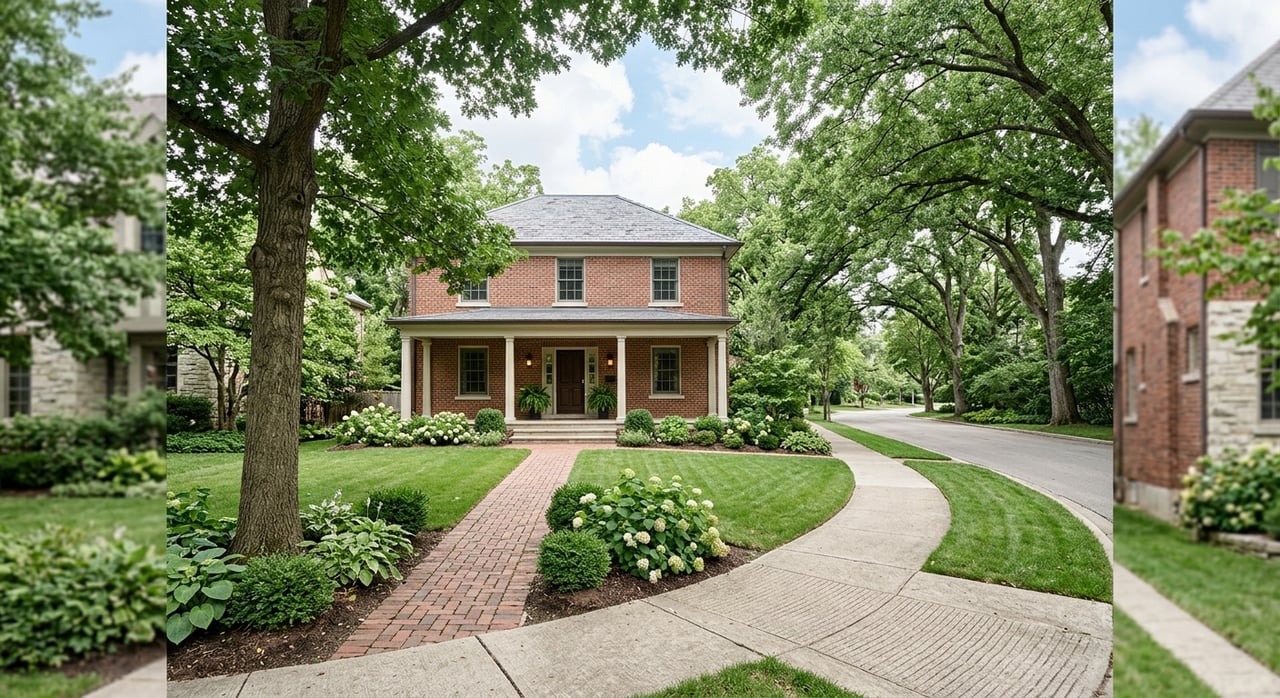
Riverside was laid out in 1868 by Frederick Law Olmsted and Calvert Vaux as a 1,600-acre planned community west of Chicago. Its design used curving streets, avoided square corners and cul-de-sacs, and aimed to keep residents close to nature while maintaining a rail connection to downtown Chicago.
That history is not just a talking point. The Village of Riverside says the community became a National Historic Landmark in 1970 and describes it as the first planned model community in the country to organize open space and parkland as part of everyday urban living. When you spend time here, that planning shows up in the street patterns, the shared greens, and the way the village feels distinct from a more typical grid-based suburb.
Riverside is also compact by modern suburban standards. Census QuickFacts estimates 8,939 residents across 1.98 square miles of land in July 2025. That smaller scale helps explain why many people describe the village as close-knit and easy to navigate.
One of Riverside’s biggest lifestyle advantages is that it does not feel sprawling. Census QuickFacts reports an 84.8% owner-occupied housing rate, along with a median owner-occupied home value of $491,400 and median gross rent of $1,484. Those numbers help paint a picture of a stable, largely residential community rather than a large commercial hub.
For you as a buyer or seller, that means everyday life often feels centered on home, neighborhood routines, and familiar public spaces. You are more likely to notice the landscape, the pace, and the repeated village rituals that come with living in a place where the built environment was intentionally planned.
In Riverside, green space is not tucked away on the edges of town. Public Works maintains more than 34 miles of road, 4 parks, Indian Garden, Swan Pond, and more than 60 islands, triangles, and commons. The village says public land makes up nearly 40% of the village boundaries.
That matters because it changes how a normal day feels. Instead of seeing nature as a destination, you experience it along streets, near public gathering spots, and throughout everyday movement around the village. The landscape is part of the routine.
Guthrie Park serves as Riverside’s central civic green space. According to the village’s master landscape plan, it sits next to the Central Business District, the train station, Village Hall, and the library. It is also the main gathering area for events such as the July 4 concert and Riverside Arts Weekend.
If you live nearby, that means village events are woven into the calendar in a visible, accessible way. Even if you are just running errands or heading to the train, you are moving through spaces that double as community gathering points.
Swan Pond is another signature part of Riverside life. The village says a walking and bike path was installed there in 2021, and mowed trails help keep more than 4 acres accessible.
For residents, that creates an easy option for a walk, a bike ride, or a slower moment outdoors without leaving town. It is one more example of how Riverside’s landscape supports simple daily habits, not just special outings.
The Landscape Advisory Commission says Riverside’s public green spaces are integral to both Olmsted’s design and the village’s National Historic Landmark designation. The commission also sponsors arboretum walking tours of Guthrie Park, and the village was certified as an arboretum in 2015.
That tells you something important about the community. Tree canopy, plantings, and preserved open space are not treated like background details. They are part of the village identity and part of what many residents value in everyday life.
Riverside’s Parks & Recreation department lists before and after school programming, summer camps, early childhood programs, youth programming, adult programming, and the Riverside Anglers Association. That range suggests the local calendar is active in ways that go beyond simply having parks nearby.
For households trying to picture day-to-day convenience, this matters. Activities, programs, and recurring events close to home can make weekly routines easier to organize and more connected to the community.
Riverside’s business base is compact, but it covers more than many people expect from a small village. The village’s shop-local page lists breakfast spots, Thai, Mexican, Cuban, Latin fusion, Italian dining, a pancake house, a distillery, ice cream, and a boutique wine shop.
Beyond dining, the village also lists a local grocery store, candy shop, glass studio, auto repair, salons, barbershops, health and wellness providers, and other professional services. The practical takeaway is simple: many day-to-day errands can be handled within Riverside itself, even if you still leave town for larger retail trips.
Riverside says it currently has three Business Districts, with much of the activity concentrated along the Harlem Avenue and Burlington/Ogden corridors. Commercial life is not scattered at random, which helps give the village a more intentional and navigable feel.
The village also permits outdoor dining in business districts, with standards that keep sidewalks passable and set operating hours from 6 a.m. to 11 p.m. That kind of structure supports a local business environment that feels active without losing sight of daily functionality.
Representative local businesses listed by the village include Chew Chew, Michael’s Pancake House, La Barra, Quincy Street Distillery, Sawmilly, Vinette, Riverside Foods, Aunt Diana’s, and Higgins Glass Studio. You do not need to know every name before moving here to understand the bigger point.
Riverside offers the kind of local mix that can support coffee runs, casual dinners, grocery stops, gifts, and a few fun weekend errands without requiring a long drive. That can be a major lifestyle benefit if you value convenience with a small-town feel.
A recurring anchor in Riverside is the Farmers’ Market. For 2026, the village lists market hours as Wednesdays from June 3 through October 7, from 2:30 to 7:00 p.m., at Centennial Plaza near the Historic Water Tower.
The village also says the market often includes programming in conjunction with the public library. For residents, that can turn an ordinary weekday into a standing local ritual, whether you stop in for produce, browse for a few minutes after work, or build it into your family’s weekly schedule.
Riverside’s setting works well for people who want village character without feeling cut off from the broader region. The village says it is accessible from I-290, I-294, I-55, and I-88. It also offers free parking on streets surrounding the Historic Water Tower, including East Avenue, Forest Avenue, Longcommon Road, Burlington Road, and Pine Avenue.
That kind of road access can make everyday logistics easier, whether you are commuting, visiting nearby suburbs, or heading into the city. It also helps explain why Riverside appeals to buyers who want both charm and practical access.
For rail commuters, the Metra BNSF Line is a key part of Riverside life. Metra lists the Riverside station at 90 Bloomingbank Road, with Chicago Union Station as the downtown terminal on the line.
The village’s visitor information also points residents to the BNSF schedule, reinforcing that train access is a normal part of the local routine. If your work or lifestyle includes regular trips into Chicago, this connection may be one of Riverside’s most useful everyday features.
Census QuickFacts lists a mean travel time to work of 32.5 minutes for Riverside residents. That does not define every commute, but it does show that travel planning is a real part of household decision-making here, just as it is in many close-in suburbs.
When buyers think about Riverside, it helps to weigh both sides of the equation: the village offers access to the city and major expressways, while still maintaining a more residential and landscape-focused pace at home.
Riverside’s history is visible, but it is not locked behind glass. The Riverside Historical Museum is open on Saturdays from 10:00 a.m. to 2:00 p.m., and the village says it supports exhibitions, online presentations, tours, lectures, publications, and educational outreach focused on Olmsted, Vaux, architecture, and local history.
That gives residents an easy way to engage with the village’s story as part of an ordinary weekend. It is less about formal tourism and more about living in a place where local history stays present and accessible.
Riverside Arts Center contributes to the local weekend calendar with galleries, studios, and a school. Its official site says it offers classes for kids, teens, and adults, and current gallery hours are Thursday through Saturday from 1:00 to 5:00 p.m.
Recent event pages show participation in Riverside Arts Weekend and community art-making and exhibition programming. For residents, that adds another outlet for creative activity close to home.
Village Tours offers self-guided, guided, and online options, including a walking-tour pamphlet and periodic civic-organization tours. The village notes that the museum is located in the historic pump house at Forest Avenue and East Avenue in downtown Riverside.
For someone new to town, this makes Riverside easier to learn in a hands-on way. For longtime residents, it reinforces how history and architecture remain part of everyday village life.
Taken together, Riverside’s Historic Village offers a lifestyle shaped by design, public green space, local businesses, cultural activity, and practical access to Chicago. It is a place where the landscape is part of your normal routine, not a backdrop you only notice on weekends.
If you are considering a move to Riverside, it helps to look beyond home styles and square footage. The real question is how you want your day-to-day life to feel. In Riverside, that answer often includes walkable local patterns, a strong sense of place, and a village scale that stays memorable long after the first visit.
If you are exploring Riverside or nearby western suburbs, Gagliardo Group can help you compare neighborhoods, understand local housing stock, and plan your next move with confidence.